How Does Physical Development Affect Cognitive Development in Premature Babies
Physical development is the nearly readily visible of the child development domains. Parents notice height and weight as well as the development of both fine motor and gross (large) motor skills. Information technology's of import to recall that what we can see physically corresponds to what nosotros tin can't see which is brain evolution. In all developmental domains, the brain is promoting exploration and motion but when exploration and movement occur it besides stimulates encephalon development including both neurogenesis (growth of new brain cells) and synaptogenesis (forming new connections between encephalon cells). In fact at diverse times during the first few years of life, a baby'due south brain produces so many connections that they finish upwards with more than in an developed brain. Later through a process chosen pruning, synaptic connections that are not used by the kid are eliminated.
Parents play an important role in all of the developmental domains and concrete evolution is equally of import. Parent'due south bonding with their child develops a sense of feeling safe to explore and positive feedback encourages a child to reach out more and push button harder. Parents also provide guidance and support through a process known as "scaffolding". Providing objects to encourage a infant to reach and grasp, holding the hands of a toddler while they take a few steps, pedagogy potty training, help a child with buttoning and zipping vesture, helping them learn to ride a bike and playing catch are just a few examples of how parents provide scaffolding to help children develop physical abilities.
In addition to encouraging and teaching specific skills, parents should promote a salubrious lifestyle for their children. This includes helping them to get acceptable sleep, eat a well-balanced diet and stay agile physically. In this endeavor, the all-time approach for parents to accept is to model the behavior likewise equally teach and encourage these very important health habits. Teaching safety and maintaining a rubber dwelling environment (specially in the early years) is also very important. Keeping up with regular check-ups and keeping immunizations up to date is important also.
If you are concerned about possible delays in your child's physical development nosotros suggest you utilise the American Academy of Pediatrics: Motor Filibuster Tool then discuss any concerns you accept with your pediatrician.
Recommended Books for Parents
The Family Fitness Fun Book: Healthy Living for the Whole Family 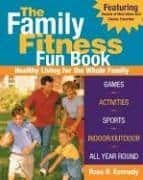
It's time to spend that precious time with your family–all while having fun and getting fit.The Family Fitness Fun Book contains activities for all ages, and groups, in all kinds of conditions, making sure your Saturdays (and every mean solar day) will always be active and exciting!
Bring dorsum those fun-filled days, whether it is summer or winter, rainy or sunny!The Family Fitness Fun Bookis designed to exist simple and easy-to-use, featuring:
· A searchable chart to assist your selection of the perfect game for your schoolhouse party or family unit picnic
· Helpful icons to assist you observe an appropriate activity for any size group of any historic period
· Chapters divided by weather, infinite, and environment atmospheric condition

Tennis pro and master coach Karen Ronney offers a pace-by-step handbook with over 200 games for parents who want to jump-start their child'south fundamental skills, cocky-confidence, and sports potential while creating a lifestyle of family fitness. She offers an in-depth caption of a child's evolution, their learning styles, with physical and brain anatomy and growth facts, and how simple, fun activities can be the central to unlock their abilities in every area of life. Includes contempo scientific and academic research, progress charts, how to comprise purposeful play, and even helps for families with special-needs kids.
Gymboree Series On Activities for Children We highly recommend this series for parents because the books provide numerous "how to practise it" play activities to nurture (provide the scaffolding) child evolution. From babies to young children they cover cognitive, language, physical and social development. Not only will these activities stimulate development only build a strong parent and child relationship. Plus they are fun for both parents and kids.
Concrete Developmental Milestones
Babe (0 to xviii m) Toddler (18 m - 3y) Preschooler (3y - 5y) School Age (6y - 12y) Teens (13-18)
Nascence to Half dozen Months
Gross (Big) Motor Skills
- Lifts head and breast when on the stomach.
- Rolls from back to side or side to back.
- Rolls completely over from back or stomach.
- Sits with support.
- Holds head cock.
- Tin can heighten him/herself upwardly on forearms (while on tummy) and hold head up
- Rolls from dorsum to tummy (by four-6 months)
Fine (Small) Motor Skills
- Reaches for objects.
- Holds objects for brusque periods of time before dropping them.
- Touches and pats canteen.
- Usually responds to objects or faces equally they move
- Plays with fingers, easily, and toes
- Holds and manipulates objects; sucks on everything!
Half dozen to 12 Months
Gross (Large) Motor Skills
- Progresses from sitting steady when supported to sitting without back up.
- Crawls on hands and knees.
- Pulls to standing position.
- Walks with assist.
- Stands alone.
- Learns to crawl, stand and walk
- Sits without back up (by 8 months)
- Begins to cruise and eventually walk
- Develops eye-hand coordination
Fine (Minor) Motor Skills
- Reaches for small objects.
- Places objects in a container.
- Picks up medium and big objects.
- Changes objects from one paw to another.
- Plays with two toys; ane in each hand.
- Points with fingers.
- Transfers toys from mitt to hand
- Sees almost everything with good vision
- Develops eye-paw coordination
12 to 18 Months
Gross (Large) Motor Skills
- Stands alone.
- Walks without support; starting and stopping with control.
- Walks backward with a pull toy.
- Runs stiffly.
- Squats down to selection up an object and stands up.
- Climbs upward stairs; creeps downward backward one at a time.
- Climbs out of the crib and playpen.
- Tin throw a brawl
- Walks well
- Can walk while holding an object
Fine (Modest) Motor Skills
- Turns several pages of a book at one time.
- Scribbles on newspaper with crayon.
- Releases ball with slight thrust.
- Picks up small objects between pollex and forefinger.
- Can open a small box.
- Holds a spoon with a fist.
- Feeds self with fingers.
- Holds and drinks from a cup.
- Picks upwards small objects with pointer finger and thumb
- Can build a tower of cubes
- Turns pages in a book
18 To 24 Months
Gross (Large) Motor Skills
- Runs stiffly.
- Jumps off the ground with both feet.
- Bends at the waist to pick up an object.
- Walks up and down steps, one step at a time.
- Throws objects overhead.
- Kicks a large brawl.
- Climbs onto low objects.
- Kicks backward and frontward
- Stands on a residue beam
- Walks upwards stairs with aid
- Runs well
- Enjoys riding modest wheeled riding toys
Fine (Small) Motor Skills
- Manages spoon.
- Makes vertical marks and circles with crayon (pencil).
- Turns doorknobs.
- Pulls down zippers.
- Shows hand preference, only switches hands oft.
- Assists in dressing and undressing cocky.
- Tin draw scribbles
- Drinks from a straw
Ii to Three Years
Gross (Large) Motor Skills
- Is constantly in motion.
- Jumps off low objects.
- Pushes self on wheeled toys.
- Runs just has difficulty stopping.
- Seats cocky in small chairs.
- Alternates feet going upstairs, merely not downstairs.
- Kicks ball.
- Throws brawl overhand; no aim.
- Catches objects with arms extended and elbows potent.
- Walks backward
- Can balance on 1 human foot (by iii years)
- Walks up and down stairs independently
Fine (Pocket-size) Motor Skills
- Turns individual pages of a book.
- Screws lids on and off.
- Builds crude towers of six or more blocks.
- Scribbles circles and horizontal and vertical lines.
- Takes uncomplicated objects apart and puts back together.
- Uses spoon; spills a lot.
- Strings large chaplet
- Holds scissors correctly
- Zips and snaps
Three to Iv Years
Gross (Large) Motor Skills
- Hops, skips, jumps, and runs.
- Makes sudden stops and starts.
- Walks on tiptoes.
- Hops on 1 foot.
- Marches to a rhythm.
- Alternates steps when climbing stairs; comes down one footstep at a time.
- Throws ball by thrusting with arm and shoulder; catches with arms held out direct.
- Swings on a swing.
- Walks a depression balance beam.
- Rides tricycle.
Fine (Small) Motor Skills
- Builds cake towers of about 9 or ten blocks.
- Holds pencils and crayons with command.
- Draws directly lines and copies circles.
- Draws 3-part person.
- Cuts with scissors.
- Unbuttons clothes.
- Pulls upwards large zippers.
- Uses spoon and fork.
Four to 5 Years
Gross (Large) Motor Skills
- Whirls around turns somersaults and hangs on confined.
- Hops several times in a row.
- Climbs large play equipment.
- Jumps forward using a forrad arm action.
- Jumps upwards and down.
- Throws brawl overhead with less body movement.
- Bounces a ball and catches the brawl with elbows in front of his body.
- Tin hop on ane pes, skip and bound
- Can grab a ball with both hands
- Can catch a beanbag
Fine (Small) Motor Skills
- Builds straight cake towers.
- Draws a house and person.
- Prints proper name.
- Forms rough shapes with dirt.
- Cuts on lines with scissors.
- Brushes teeth, combs hair and washes easily.
- Dresses self except for tying shoes.
- Develops hand preference.
- Dresses and undresses him/herself
- Tin can copy a uncomplicated design
- Uses pair of scissors to cutting a straight line
Five to Six Years
Gross (Large) Motor Skills
- Whirls effectually, turns, somersaults and hangs on confined.
- Hops several times in a row.
- Climbs large play equipment.
- Jumps frontward using a forward arm activeness.
- Jumps up and downward.
- Throws ball overhead with less body movement.
- Bounces a ball and catches the ball with elbows in front of her trunk.
Fine (Small) Motor Skills
- Builds straight cake towers.
- Draws a house and person.
- Prints proper noun.
- Forms crude shapes with clay.
- Cuts on lines with pair of scissors.
- Brushes teeth, combs hair and washes hands.
- Dresses self except for tying shoes.
- Develops mitt preference.
Half dozen to Nine Years
- Growth charge per unit slows.
- Requires around eleven hours of sleep each night.
- Needs frequent rest.
- Establishes preference for one side of the body over the other.
- Has established which paw to use.
- Girls mature faster than boys.
- Coordination not fully adult.
- Runs, jumps, climbs, slides, and dances.
- Plays brawl, tag, and grab.
- Improves writing skills.
- Engages in art activities.
- Plays musical instruments.
- Dresses and undresses self completely.
9 to 12 Years
- Develops more developed-similar proportions.
- Develops harder, larger bones.
- Is ill less oftentimes.
- Extremely active.
- Starts developing secondary sexual practice characteristics.
- May begin growth spurt.
- Develops interest in more specific motor skills such as skating, bicycling, running and gymnastics.
- Engages in organized sports such equally tennis, baseball, football game, swimming, and golf.
- Has well developed pocket-sized muscles.
- Refines writing.
- Develops special interests in activities such as model edifice, store work, art classes, music and crafts.
- Tries new foods; has favorites.
- Eats neatly.
12 – xv years of historic period
- Puberty: Rapid growth period
- Secondary sexual characteristics appear: grow body hair, increase perspiration and oil product in hair and skin
- Girls – chest and hip evolution, the onset of menstruation
- Boys – growth in testicles and penis, wet dreams, deepening of vocalism Tremendous concrete growth: gain height and weight
- Body Image
- Preoccupation with concrete changes and critical of advent
- Anxieties about secondary sexual feature changes
- Peers used as a standard for normal appearance (comparison of self to peers)
15 – xviii years of age
- Secondary sexual characteristics advanced
- 95% of developed height reached
- Puberty is completed
- Physical growth slows for girls, continues for boys
- Trunk Image
- Less concern about physical changes merely increased interest in personal bewitchery
- Excessive concrete activity alternate with lethargy
Source: https://childdevelopmentinfo.com/child-development/physical-development-in-children-and-adolescents/
0 Response to "How Does Physical Development Affect Cognitive Development in Premature Babies"
Post a Comment